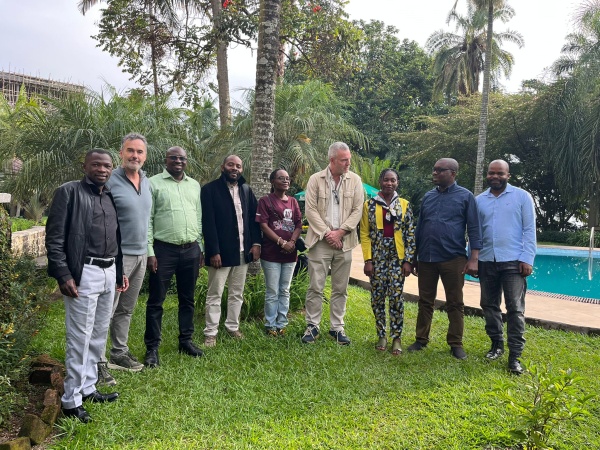

Communities in Burundi, the Democratic Republic of Congo (DRC), South Sudan, and Uganda continue to face complex challenges, from armed conflict, ethnic tensions and land disputes to youth marginalization and the lasting impacts of past conflicts. In November, local partners from the DRC and Burundi came together in Gisenyi, Rwanda, and Bujumbura, Burundi, to explore how these challenges could be addressed through collective action. Organized by Human Security Collective as part of The Peace Project, the workshops focused on turning local conflict analyses into practical advocacy strategies to strengthen human security and support social cohesion.
In Gisenyi, partners working in North and South Kivu, DRC, shared experiences from the field and explored where their challenges overlap. Discussions connected local realities to advocacy efforts that can influence change from the community level to national and international arenas. Participants reflected on pressing challenges, including land disputes, weak and overlapping governance systems, armed group dynamics, and the spread of hate speech and disinformation. A key focus was the role of Local Security Committees and how civil society can engage with them in ways that strengthen trust, inclusion, and community safety.
The workshop concluded with a shared commitment to two advocacy priorities: improving the functioning of Local Security Committees, with particular attention to gender-based violence and forced recruitment, and addressing land-related conflict through mediation approaches.
In Bujumbura, Burundi partners joined a two-day workshop to translate shared conflict analyses into a multi-year advocacy strategy. Sessions focused on linking field experience to evidence-based influencing and exploring practical ways to engage decision-makers, allies, and other stakeholders.
Discussions highlighted key themes such as mental health and trauma, inclusive governance, especially for youth and women, transitional justice, and the use of arts and culture as an entry point for peace. Participants also emphasized the importance of inclusive engagement across society and interreligious dialogue. The workshop resulted in the drafting of initial advocacy plans for 2026.