
Last October, over 30 students enrolled in the minor International Relations and Human Rights Law at Erasmus University College completed their Move 4 Human Rights trajectory. Guided by Human Security Collective, the program combined a series of workshops with hands-on fieldwork, introducing students to participatory action research as a way of working with communities to identify human rights challenges and develop practical responses.
Moving beyond the classroom, students explored local human rights issues in Rotterdam by engaging directly with community members, organizations, practitioners, and relevant stakeholders. In doing so, they examined how theory meets practice and how learning can translate into concrete, community-based action. In this story, we highlight three of the student-led projects that emerged from the trajectory.
Housing crisis
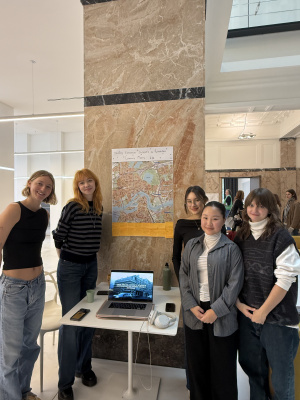
Finding a stable, affordable place to live is a challenge many students in Rotterdam face. For their Move 4 Human Rights project, students Evy, Léa, Lola, Grace, and Lily used community mapping and storytelling as participatory tools to explore these experiences firsthand, inviting peers to share their housing realities across the city.
The project aimed to reveal not just statistics but the lived realities of students, highlighting barriers such as long searches, extra fees, poor housing conditions, and discrimination. By presenting their findings in a video featuring students’ voices, the team sought to raise awareness of housing as a fundamental human right and emphasize that understanding lived experiences is a crucial step toward change.
Women’s safety
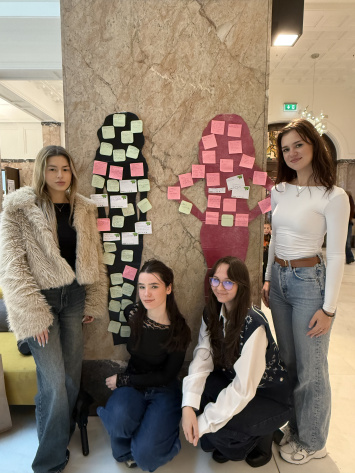
Students Kalina, Ruxanda, Lena, and Dóra explored the issue of harassment in the city, creating space for women to share their experiences and coping strategies. On campus, they displayed two life-sized figures: one representing a silenced woman, unable to speak out against harassment, and another representing an empowered woman who can express herself and navigate these challenges. Students were invited to write down experiences or coping strategies and place them on the figures, creating a visual representation of both vulnerability and resilience. The team also conducted video interviews to capture how harassment affects daily life and shapes a sense of security, bringing an often-invisible issue into clear view.
Education inequality
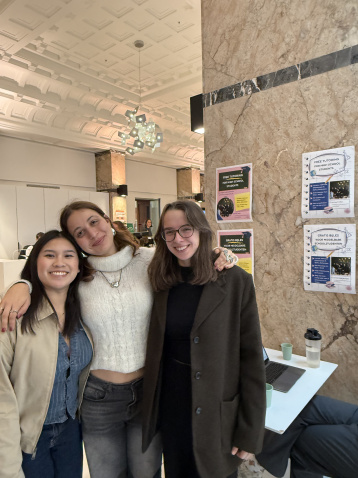
Nathalie, Marta, Amalia, and Serafina turned their attention to education inequality in Rotterdam South, particularly the challenges faced by non-Dutch and second-generation students. The team reached out to Studieboost, a local organization providing free tutoring and mentorship to high school students, to better understand these challenges. Through conversations with the organization’s leaders, they learned that one of the organization’s challenges was visibility: students are unaware that free support is available to them. In response, the students provided practical support by creating infographics, social media templates, and a short video highlighting both the challenges students face and how tutoring can help bridge these gaps.
Learning through action
Across all projects, students emphasized the value of using participatory action research methods to contribute to change. “I really appreciate that this method encourages us to not just report, but to actually try to help the community,” Nathalie reflected.
By working directly with community members and local organizations, students were encouraged to think more critically about power, representation, and responsibility in human rights work.